






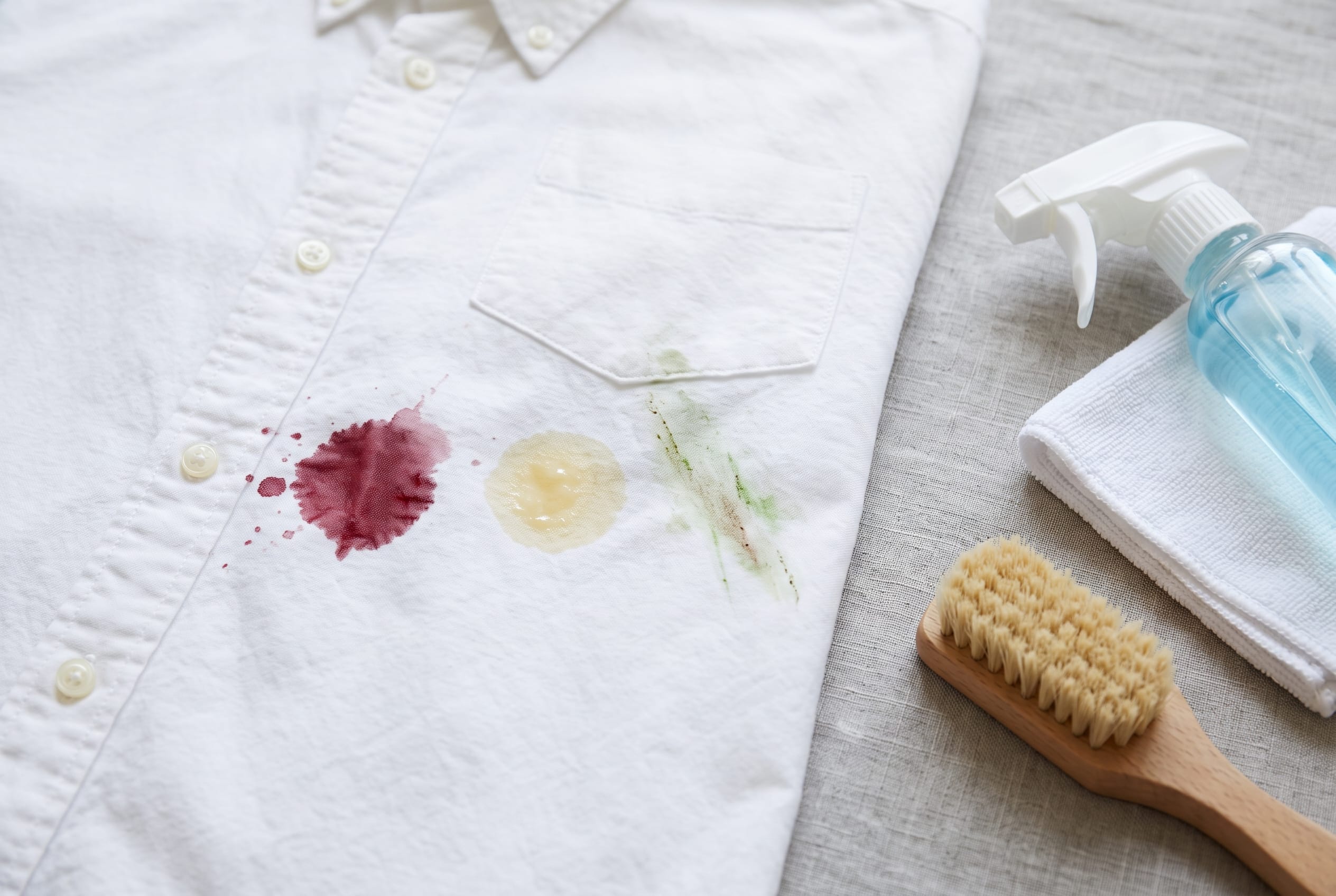
Stains are never wanted, but they certainly have a funny way of showing up at the least opportune moments, don’t they? Maybe you stayed stain-free while touching up some paint or changing your bike tire, but then you end up with an unwanted souvenir the moment you’re entertaining or out on date night. And while some spots disappear with a quick wash, others are determined to become part of the garment.
The stubbornness of a stain usually comes down to what it’s made of. Oil-based spills, deeply pigmented liquids, proteins, and dyes interact with fabric in very different ways, so there’s no universal stain-removal trick. The best defense is knowing what you’re dealing with, treating it quickly, and avoiding methods that can spread the stain or set it permanently.
Related: Spills on Your Big Day? How to Get Stains Out of Your Wedding Dress
What Makes a Stain Difficult to Remove?
The toughest stains tend to have one thing in common: they don’t merely sit on top of your fabrics. Some contain oils that resist water, some contain strong pigments, and others chemically interact with fibers as they dry or age.
The second most important factor in stain removal is one of the most important aspects in all our lives: time. The American Cleaning Institute recommends treating stains as soon as possible and checking that they’re actually gone before putting a garment in the dryer, since heat can set many stains and make them significantly harder to remove.
Here are some of the biggest troublemakers you’ll face.
Grease and Oil Stains
Cooking oil, butter, salad dressing, bacon grease, motor oil, bike-chain grease, and all their ilk are notorious offenders because lipids (oils, fats, and waxes) don’t mix with water. A normal wash may not completely remove the oily residue, especially if the stain has already dried. Have a food stain that’s giving you trouble? Even if it only looks like marinara, the lipid content from oils or meats might be allowing the stain to hang on.
For washable garments, pretreat the area with a suitable prewash stain remover or liquid laundry detergent, then wash using the warmest water that is safe for the fabric. Don’t put the garment in the dryer until you’ve confirmed the grease is gone. For delicate, specialty, or dry-clean-only fabrics, skip DIY experiments and take the garment to a professional cleaner.
Read More: Your Guide to Cleaning Grease and Oil Stains
Red Wine and Other Dark Beverages
Red wine has entirely earned its reputation for ruining fabrics and clothes. Its combination of deeply colored compounds and liquid that can rapidly soak into absorbent fibers makes it a particularly unwelcome guest on light-colored clothing. Coffee and tea can also leave persistent discoloration, while sugary beverages may leave behind stains that become more visible as they oxidize over time.
For washable fabrics, gently blot the spill and sponge or soak the area with cool water. Pretreat with a suitable stain remover or liquid laundry detergent, then wash according to the garment’s care instructions. Avoid aggressive rubbing, which can spread the stain or damage the fabric.
Read More: The Secret to Removing Wine Stains
Ink Stains
Ink is difficult because you’re dealing with concentrated pigments or dyes designed to stay where they’re put. Different inks also respond very differently to cleaning, and some types can be extremely difficult or even impossible to remove completely. For a washable garment, carefully blot rather than scrub and use a stain treatment appropriate for the fabric and ink. Always test a treatment on an inconspicuous area first (like an interior seam), particularly on colored garments.
If ink lands on silk, wool, leather, or another specialty material, professional cleaning is generally the safest choice. Trying multiple household chemicals can create a much bigger problem than the original spot.
Read More: A Complete Guide to Fighting Ink Stains
Blood and Other Protein-Based Stains
Blood is challenging because it contains proteins that can bind to fabric as the stain dries. Fortunately, fresh stains are generally easy to address when compared to old, set-in ones.
For washable fabrics, start with cool water and hydrogen peroxide or an appropriate enzyme-based stain treatment when the care label permits it. Avoid any hot water, which can cause protein-based stains to set more firmly.
Grass Stains
Grass stains combine plant pigments, dirt, and other organic material, which can make them particularly stubborn on light-colored clothing.
Treat the stain promptly with a suitable prewash stain remover or detergent, test for colorfastness first and wash according to the garment’s care label. Don’t assume a stain is gone simply because it looks lighter while wet, and inspect the garment carefully before drying.
Read More: Tips for Handling Grass Stains
Sweat and Deodorant Stains
Not all difficult stains happen at dinner parties. Sweat and deodorant can gradually build up around collars, underarms and cuffs, where repeated exposure can lead to yellowing, discoloration and residue.
Treat these areas regularly rather than waiting for heavy buildup. For stubborn stains, enzyme-containing products or oxygen bleach may help on fabrics where those products are safe, but always follow the garment and product labels.
Stay Fresh with Professional Shirt Cleaning
The Biggest Stain-Removal Mistakes to Avoid
In some cases, what makes a stain “impossible” to deal with is less about the stain itself and more about what happens right after the spill. Just a little extra caution can prevent a manageable spot from becoming permanent.
Keep these rules in mind:
- Don’t wait: Fresh stains are generally easier to treat than stains that have dried or set.
- Don’t rub aggressively: Blot or gently sponge instead. Rubbing can spread a stain and damage fibers.
- Don’t dry a stained garment: Dryer heat (even on low) can set remaining discoloration.
- Don’t skip the care label: The right treatment depends on the fabric and garment construction.
- Don’t experiment on delicate fabrics: Test stain treatments on an inconspicuous area first, and consider professional cleaning for specialty garments.
When Should You Call a Professional?
DIY stain removal makes sense for many washable everyday garments, especially when you can catch the stain quickly. But a professional cleaner can be the better choice when the garment is valuable, delicate, complex, or labeled specifically for dry cleaning.
This is especially true for silk, wool, cashmere, leather, embellished garments, suits, formalwear, and other specialty pieces. Professional cleaning experts like those at Dependable Cleaners will assess the fabric, construction, and stain composition before choosing an appropriate cleaning and treatment method. Dependable even offers free pickup & delivery or 24/7 dropoff kiosks for your convenience, plus all of our dry cleaning uses eco-friendly solvents for better clothes, a better environment, and a better you.
And if you’ve already washed the garment and the stain is still there, don’t lose hope — instead, find the cleaners who are always Dependable.